What to know about campus chillers
A campus closure or central-plant upgrade can make one or more chillers surplus even when other buildings still depend on the chilled-water network. The sale scope should distinguish the individual machine from shared pumps, distribution piping and controls.
A facility representative in Cleveland can start with the asset identifier, the machine’s location and the operational systems that must remain in place. If the property is being vacated, identify who will provide access and authorize release after normal operations end.
Plan the pickup at your Cleveland site
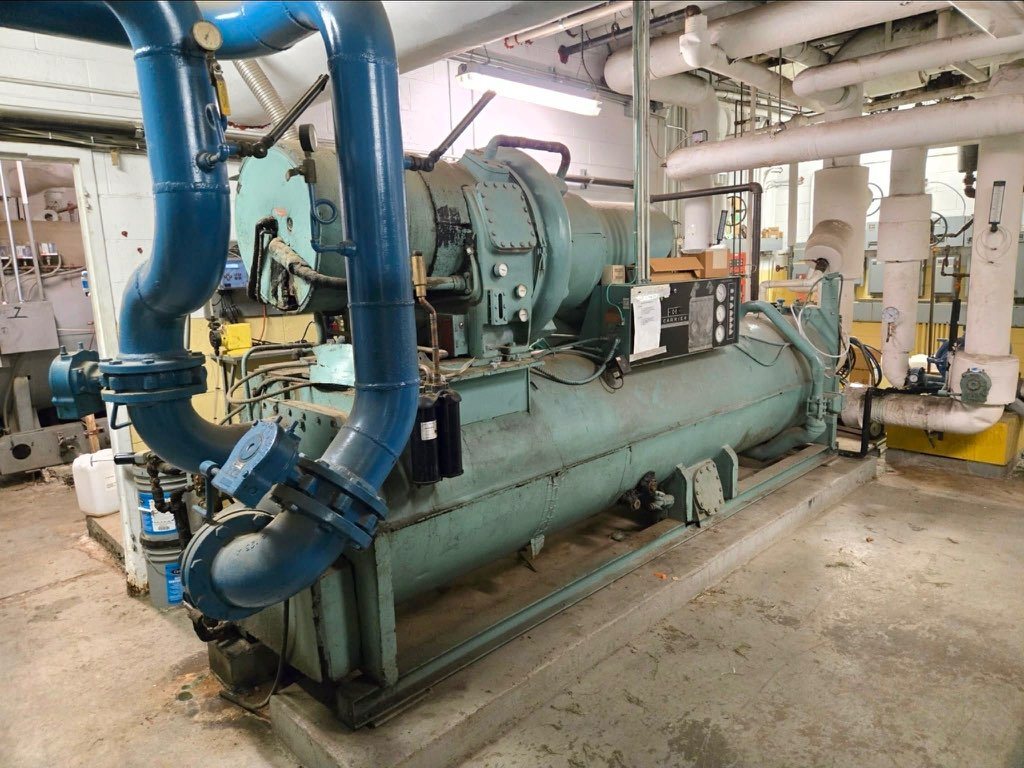
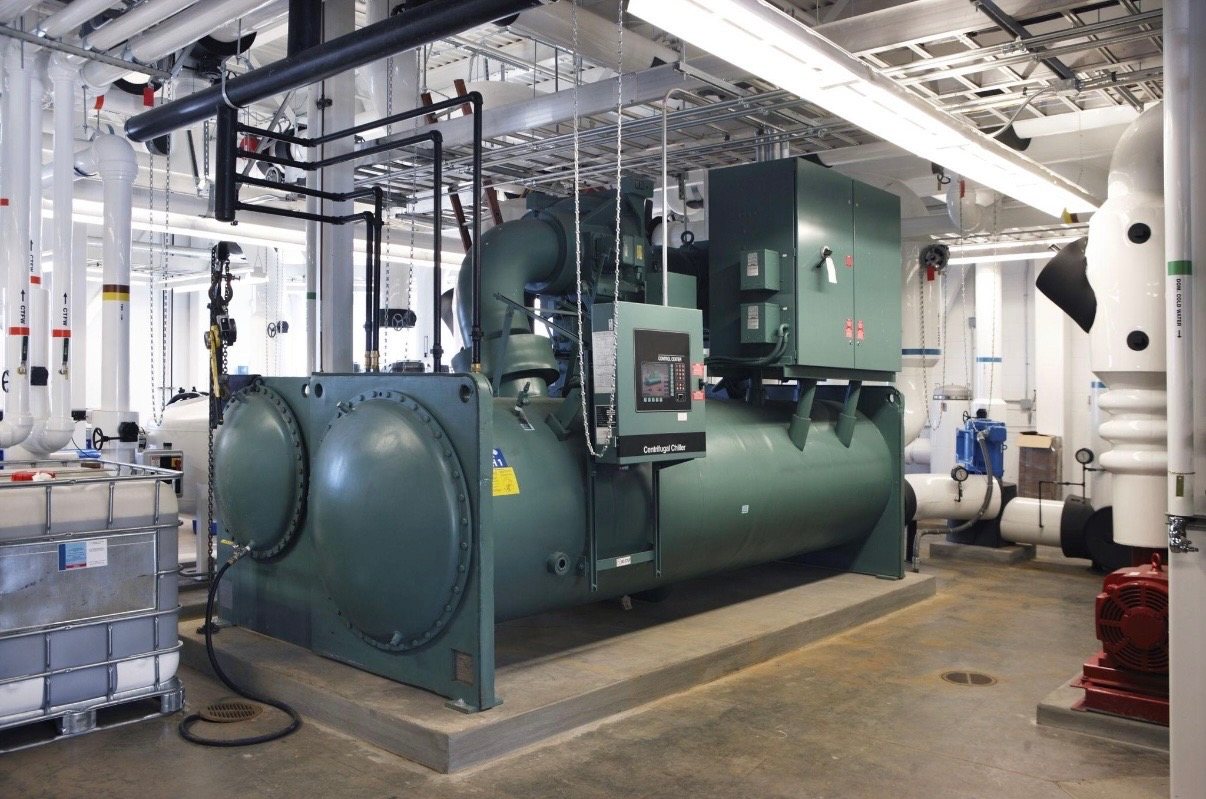
Cleveland is in Cuyahoga County. For a Cleveland mechanical room, describe whether the route leaves through a basement, a service corridor, a roof opening, or a ground-level door. A water-cooled unit can have separate condenser-water piping, so a simple exterior photo is not enough to establish the lift plan. Explain any building access or neighboring-tenant restrictions.
Tell us about known site restrictions before scheduling. A site contact can explain what is accessible, but the removal team must evaluate the actual route, load and work area.
Inventory multiple machines separately
Provide the plant or building identifier, unit serial number, rated tons and nameplate photo. List multiple machines separately rather than assuming they are identical.
When a plant has several chillers, use the physical position or site asset number to match each wide photo to its own nameplate. List manufacturer, model, serial, capacity, voltage and refrigerant for each unit where known. Similar cabinets can conceal different equipment or service histories. Specify whether the offer should cover one machine, a selected group or all of the machines identified.
Condition is information, not a testing requirement
Let us know which machines are decommissioned, which remain connected and which have an unknown history. We can consider equipment without a running test.
If components were removed for another project, identify which ones are missing and photograph the remaining assembly. A machine with an incomplete control cabinet is different from a complete machine with an inoperable display, and both can be discussed without a test.
We consider used, surplus and non-running chillers, including equipment of unknown operating condition. There is no need to restore power, repair a fault or perform a performance test to ask for a cash offer. Accurate disclosure and a possible site access review are different from requiring the machine to operate.
Separate the chiller from live plant systems
The buyer coordinates and pays for the agreed disconnects and refrigerant recovery. Before the chiller is released, the facility representative should identify which water circuits, electrical feeds and controls serve other equipment. Qualified personnel plan isolation and recovery for the actual system. A machine that is not running can still contain refrigerant, fluid or stored electrical energy; do not cut, drain or vent it to obtain an offer.
Plan for basement or interior equipment
Coordinate with the person responsible for the central plant, campus access and isolation schedule; confirm the exit route through occupied or locked spaces.
An interior machine may have to pass through a service corridor, opening, ramp or other constrained route. Photograph each transition and describe any surfaces or adjacent machinery that need protection. The buyer coordinates and pays for agreed rigging, crane work if needed, loading and freight. Qualified personnel determine whether a route is viable and whether any separation is appropriate for that specific machine.
Understand what an offer covers
The offer considers the identifiable equipment and the work needed for the agreed removal. We make a cash offer and, when it is accepted, pay upfront before pickup. Confirm the amount, payment method, included components and buyer-paid removal scope in the transaction documents. Do not assume a separate pump, control cabinet or other nearby asset transfers unless it is specifically listed.
For a closure, identify a primary contact who can provide access and answer questions after operations stop. Ask whether there are other contractors working in the same space or using the same loading area.
What to send for a useful first conversation
When a building is closing, collect the unit identification and current photographs while safe access is available. Record the person authorized to sell, the person who can provide entry after closure, and any known removal constraints. Tell us whether records, controls or components are missing; there is no need to repair or test the machine before asking for an offer.
For surplus campus chillers in Cleveland, include the location and a contact who can confirm the asset and arrange site access. If a detail is unavailable, say so instead of taking an unsafe photograph or guessing at the specifications.
Does the owner need to hire a truck?
No. For the agreed purchase, the buyer covers loading, freight and hauling, as well as required disconnects, refrigerant recovery, rigging and crane work. The owner or site representative provides access and identifies the equipment to be sold.