
What to know about used industrial chillers
A surplus chiller can be a single packaged machine or part of a larger central cooling plant. The most useful starting point is not an estimate of scrap weight, but an inventory of the specific equipment offered and the practical route out of the building.
For removal in Madison County, identify the point where the chiller can be released and the site contact who controls access. The sale includes buyer-paid removal for the agreed scope, so the owner does not need to arrange a truck or remove refrigerant before requesting an offer. The actual path and connections must still be reviewed for safety.
Plan the pickup at your Madison County site
For pickup in Madison County, provide the actual site address and service entrance, whether the equipment is in London, the county seat, or elsewhere in the county. The address alone does not show where a truck can stage or where the chiller exits. When several machines share a plant, mark the one being sold in the photographs. Note whether its starter or drive is elsewhere and whether the surrounding pumps or piping must remain for another chiller.
Tell us about known site restrictions before scheduling. A site contact can explain what is accessible, but the removal team must evaluate the actual route, load and work area.
Compare the machine and its electrical gear
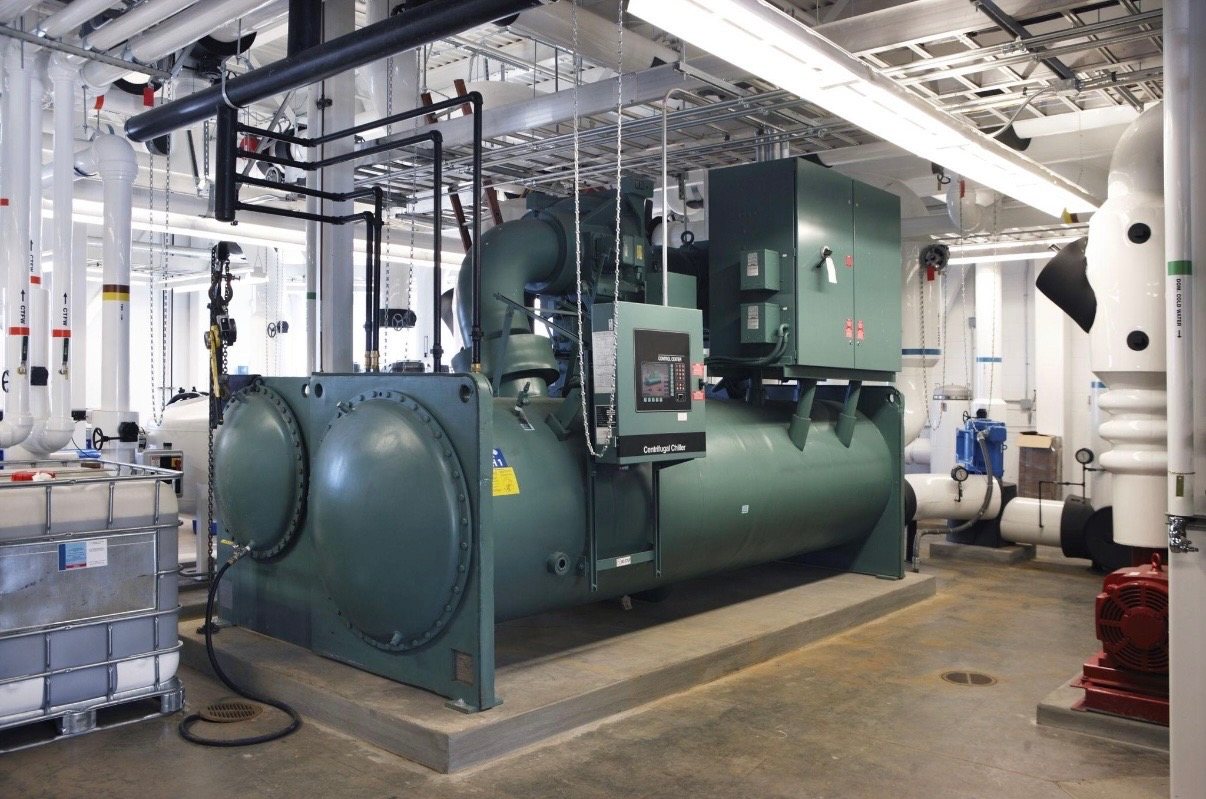
Photograph the whole assembly and its manufacturer label, and note whether a starter, drive or control cabinet is attached or separate.
Read the manufacturer, complete model and serial number from the chiller itself. Record rated cooling capacity, voltage, phase and the refrigerant on the unit plate if visible. A separate starter or variable-frequency drive can have its own label and may sit in another room. Photograph both and say whether the cabinet is included; a picture of a building automation panel alone does not identify the chiller.
Condition is information, not a testing requirement
Equipment can be shut down, older, incomplete or of unknown operating status; explain what you know without restarting it.
A long idle period can leave the maintenance history incomplete. Give the last known status and distinguish what you observed from what an old record says. An unreadable label or an unknown fault is better described honestly than filled in with a guess.
We consider used, surplus and non-running chillers, including equipment of unknown operating condition. There is no need to restore power, repair a fault or perform a performance test to ask for a cash offer. Accurate disclosure and a possible site access review are different from requiring the machine to operate.
Plan for water or process-fluid connections
The chiller may have water or process-fluid piping in addition to its refrigerant circuit. Tell the buyer which connections are still attached, whether fluid condition is known and what nearby equipment has to stay. The buyer coordinates and pays for agreed disconnects and refrigerant recovery. The site should identify the system boundaries; personnel doing the work determine the appropriate isolation and handling steps.
Protect equipment that stays behind
For indoor equipment, identify the corridor, doorway and proposed loading area; for outdoor equipment, show the pad, fence and truck approach.
Mark the chiller to be sold and photograph nearby systems that must remain. The route may pass sensitive controls, an occupied area or active machinery. The buyer coordinates and covers agreed rigging, crane if needed, loading and freight; the site representative helps identify operating boundaries and access restrictions. Rigging professionals choose methods after assessing the equipment, lift points and building conditions.
Resolve uncertainty before pickup
An initial inquiry can start with imperfect information, but material uncertainty about ownership, equipment scope or access should be addressed in the agreed plan. Share conflicting records or missing details openly. We make a cash offer and pay upfront before pickup once an offer is accepted. Confirm the payment method, equipment and buyer-paid disconnect, recovery, rigging and transport scope in writing.
For a closure, identify a primary contact who can provide access and answer questions after operations stop. Ask whether there are other contractors working in the same space or using the same loading area.
What to send for a useful first conversation
For a restricted property, explain who authorizes access and whether the machine can be visited or photographed safely. Provide the available nameplate data and a view of the chiller and its surroundings. Note any access controls, active neighboring equipment and expected release conditions. The buyer needs these facts to plan removal, not a performance demonstration.
For a surplus chiller needing removal in Madison County, include the location and a contact who can confirm the asset and arrange site access. If a detail is unavailable, say so instead of taking an unsafe photograph or guessing at the specifications.
Does the owner need to hire a truck?
No. For the agreed purchase, the buyer covers loading, freight and hauling, as well as required disconnects, refrigerant recovery, rigging and crane work. The owner or site representative provides access and identifies the equipment to be sold.