
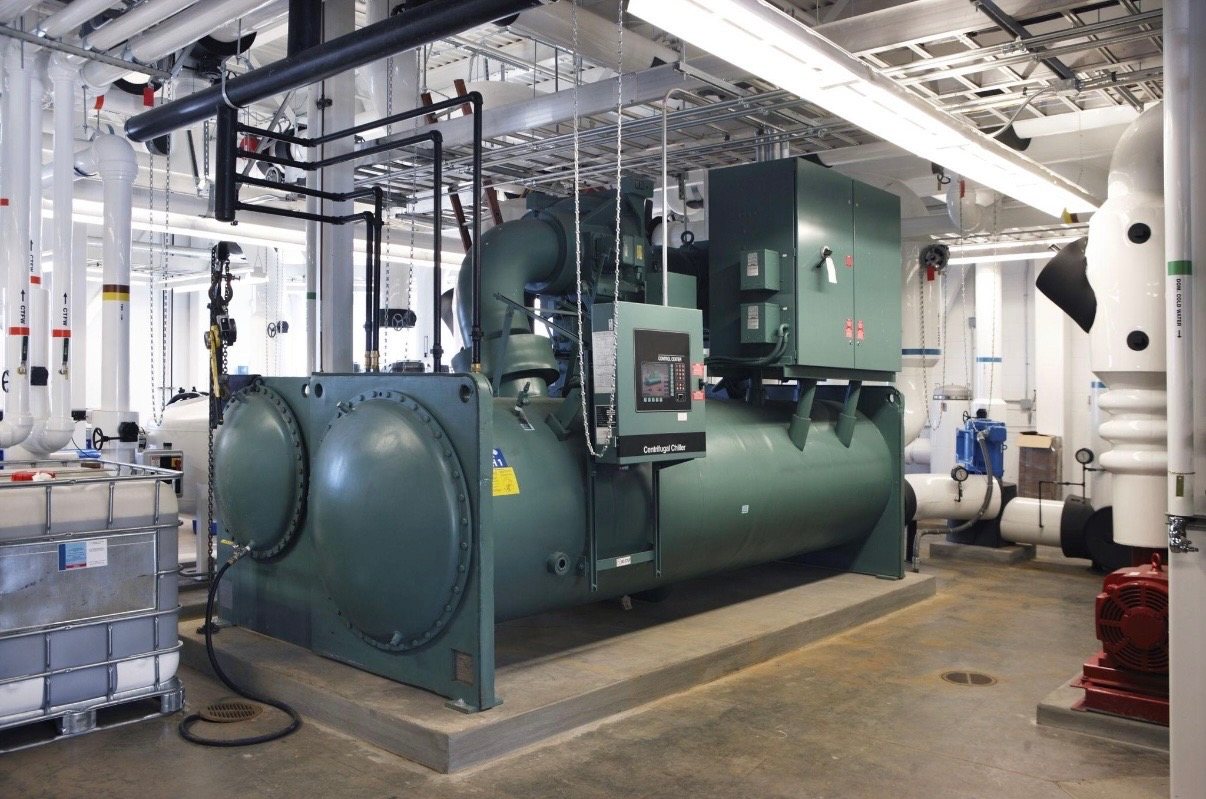
What to know about water-cooled chillers
A water-cooled chiller uses a water-side system to reject heat. At a central plant, the chiller can be tied to both chilled-water and condenser-water piping, with pumps and a cooling tower elsewhere. A sale should specify which of these items are included and which remain with the building.
For this Toledo purchase, describe the actual water-cooled chillers offered and distinguish the unit from any shared equipment that remains on site. The offer can include a plan for the buyer to remove it, rather than asking the owner to deliver it or run a test.
Plan the pickup at your Toledo site
Toledo is in Lucas County. For a Toledo site, identify the actual gate and contact who can admit a rigging and freight crew. A large industrial property can have several buildings and loading areas; a labeled site photograph helps distinguish the chiller from nearby process equipment. Note any bridge plates, floor limits or restricted turning space on the route.
Tell us about known site restrictions before scheduling. A site contact can explain what is accessible, but the removal team must evaluate the actual route, load and work area.
Work with an incomplete equipment record
Photograph the chiller label, both ends of the vessels, control panel and visible water connections. Give the rated tons and refrigerant if listed.
If the tag is difficult to read or the machine is no longer powered, a wide photo and an existing asset list can still start the conversation. Do not climb, remove electrical covers or enter an unsafe area to obtain a picture. Send whatever model, serial, capacity, voltage and refrigerant information is safely available, and clearly mark unknown fields so they are not mistaken for confirmed facts.
Condition is information, not a testing requirement
Tell us if the machine is isolated, drained or still connected. Do not assume a water-cooled unit is empty because it is not running.
If components were removed for another project, identify which ones are missing and photograph the remaining assembly. A machine with an incomplete control cabinet is different from a complete machine with an inoperable display, and both can be discussed without a test.
We consider used, surplus and non-running chillers, including equipment of unknown operating condition. There is no need to restore power, repair a fault or perform a performance test to ask for a cash offer. Accurate disclosure and a possible site access review are different from requiring the machine to operate.
Account for a closed or long-idled site
A former operator may not be present to explain the chiller’s status. Share the most recent records available and identify the person who controls the property and can authorize access to utility areas. The buyer coordinates and pays for the agreed disconnects and required refrigerant recovery. Unknown status should be treated as unknown, not as proof that the machine is empty or safe to cut.
Use drawings without treating them as a lift plan
The removal plan must account for the two water circuits, any separate starter, room openings and the size and weight of each intended lift.
Existing dimensions, rigging drawings or documented weights can help frame the job, especially for a large central-plant unit. Tell us whether they describe the installed configuration or an earlier one. The buyer covers agreed rigging, crane if needed, loading, freight and hauling. The crew still verifies current obstacles, floor capacity, actual weight and lifting points before moving the equipment.
Resolve uncertainty before pickup
An initial inquiry can start with imperfect information, but material uncertainty about ownership, equipment scope or access should be addressed in the agreed plan. Share conflicting records or missing details openly. We make a cash offer and pay upfront before pickup once an offer is accepted. Confirm the payment method, equipment and buyer-paid disconnect, recovery, rigging and transport scope in writing.
Where records conflict, share both the installed equipment label and the inventory sheet. The buyer can resolve questions during review rather than assuming that a single old schedule describes the present machine.
What to send for a useful first conversation
When a building is closing, collect the unit identification and current photographs while safe access is available. Record the person authorized to sell, the person who can provide entry after closure, and any known removal constraints. Tell us whether records, controls or components are missing; there is no need to repair or test the machine before asking for an offer.
For water-cooled chillers in Toledo, include the location and a contact who can confirm the asset and arrange site access. If a detail is unavailable, say so instead of taking an unsafe photograph or guessing at the specifications.
Can a non-running machine be sold?
Yes. We consider non-running and unknown-condition equipment, and do not require a performance test. Describe known defects and missing parts so an offer can reflect the machine as it sits. Site access and safe removal still need to be evaluated.