
What to know about used industrial chillers
A surplus chiller can be a single packaged machine or part of a larger central cooling plant. The most useful starting point is not an estimate of scrap weight, but an inventory of the specific equipment offered and the practical route out of the building.
From a building upgrade to a plant closure, a chiller sale in Dayton starts with identifying the asset and confirming who owns it. The site may still need other cooling equipment, so mark the machine being offered and explain which connected components will stay. A non-running machine can be considered.
Plan the pickup at your Dayton site
Dayton is in Montgomery County. For a Dayton-area chiller, tell us whether pickup is from an active campus, an industrial building or a property being vacated. A site plan that marks the mechanical room, service exit and possible truck position can clarify the work. Do not assume a loading dock is suitable without sharing its height and available clearance.
Tell us about known site restrictions before scheduling. A site contact can explain what is accessible, but the removal team must evaluate the actual route, load and work area.
Reconcile original and later labels
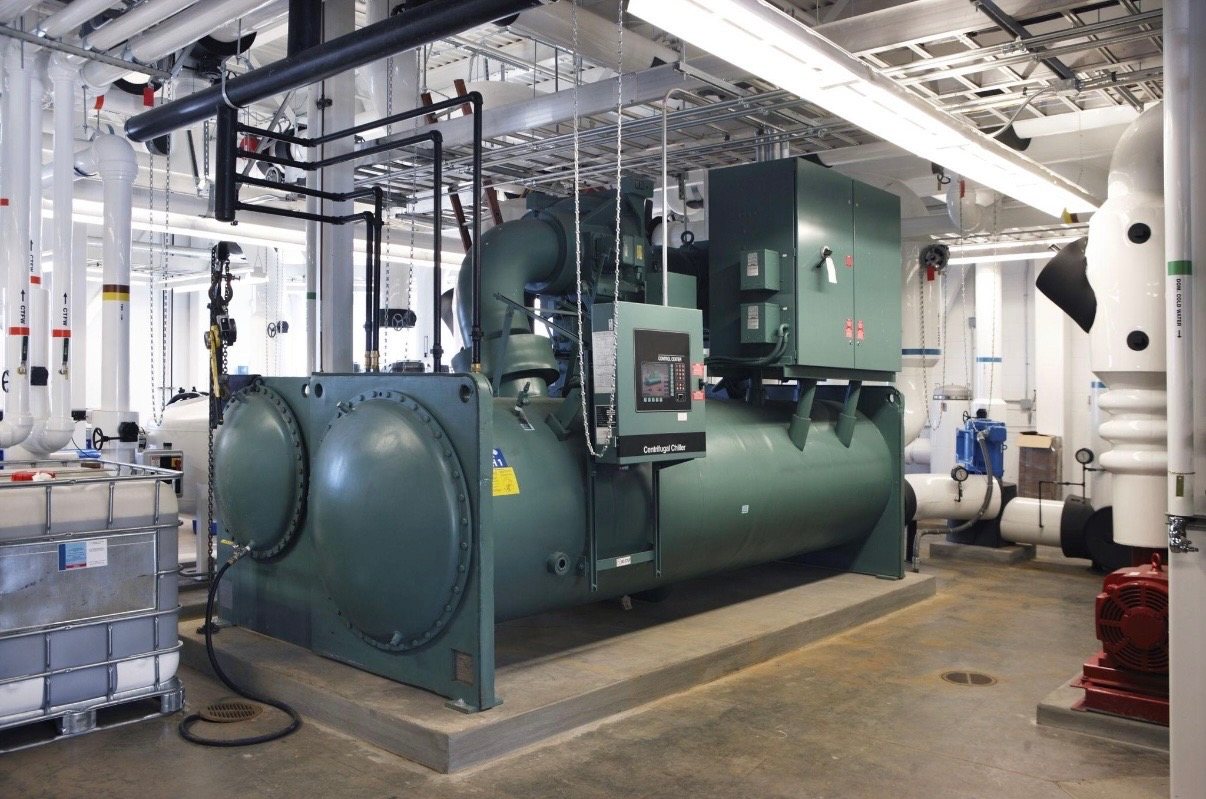
Photograph the whole assembly and its manufacturer label, and note whether a starter, drive or control cabinet is attached or separate.
An old equipment schedule, an original nameplate and a later service tag may not all describe the same configuration. Photograph the unit label and any retrofit or conversion markings without removing covers. Supply the model, serial, capacity, voltage and stated refrigerant. If the documents disagree, share the conflict instead of choosing the answer that sounds most likely; the buyer can follow up on the actual equipment.
Condition is information, not a testing requirement
Equipment can be shut down, older, incomplete or of unknown operating status; explain what you know without restarting it.
A prior refrigerant conversion, controller replacement or major repair can change how the machine is identified. An original plate and later service label can both be useful; include the dates or records only if available.
We consider used, surplus and non-running chillers, including equipment of unknown operating condition. There is no need to restore power, repair a fault or perform a performance test to ask for a cash offer. Accurate disclosure and a possible site access review are different from requiring the machine to operate.
Plan for water or process-fluid connections
The chiller may have water or process-fluid piping in addition to its refrigerant circuit. Tell the buyer which connections are still attached, whether fluid condition is known and what nearby equipment has to stay. The buyer coordinates and pays for agreed disconnects and refrigerant recovery. The site should identify the system boundaries; personnel doing the work determine the appropriate isolation and handling steps.
Check loading space and truck access
For indoor equipment, identify the corridor, doorway and proposed loading area; for outdoor equipment, show the pad, fence and truck approach.
A suitable loading area requires more than a nearby door. Describe the gate, turning room, dock height, possible truck position and any other contractors using the area. The buyer handles and covers the agreed rigging, crane work if needed, loading, freight and hauling. Weight, load distribution and the route to the vehicle must be verified for the particular machine and property.
Understand what an offer covers
The offer considers the identifiable equipment and the work needed for the agreed removal. We make a cash offer and, when it is accepted, pay upfront before pickup. Confirm the amount, payment method, included components and buyer-paid removal scope in the transaction documents. Do not assume a separate pump, control cabinet or other nearby asset transfers unless it is specifically listed.
If the chiller is being replaced, tell us when it will actually be released and which plant services must remain live. A replacement schedule and a completed isolation are different things.
What to send for a useful first conversation
Send a wide picture of the entire chiller and a readable nameplate photo. Add the pickup address or city, the unit’s location in the building, and the name of the authorized equipment owner. Say whether controls or a separate starter are included and describe any known faults. A picture of the service exit helps the buyer understand how it may be removed.
For a used chiller in Dayton, include the location and a contact who can confirm the asset and arrange site access. If a detail is unavailable, say so instead of taking an unsafe photograph or guessing at the specifications.
Can a non-running machine be sold?
Yes. We consider non-running and unknown-condition equipment, and do not require a performance test. Describe known defects and missing parts so an offer can reflect the machine as it sits. Site access and safe removal still need to be evaluated.