
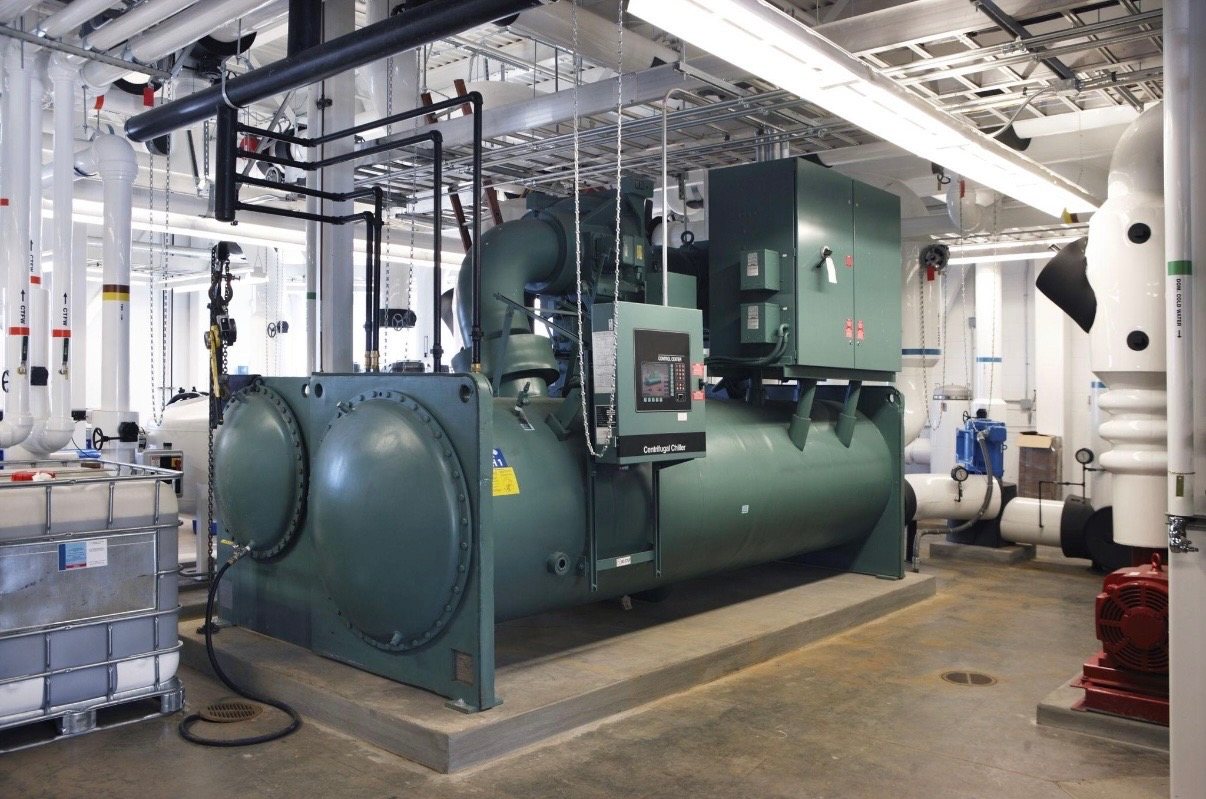
What to know about Multistack chillers
A Multistack installation can be modular. The sale might include an entire bank or only selected modules, so list the number of modules and be clear about the boundary between the equipment offered and the parts the building will keep.
A chiller labeled Multistack in Canton may be surplus after a plant upgrade, building closure or cooling-system replacement. Identify the exact machine rather than the entire plant, and specify whether the starter or drive is part of the proposed purchase.
Plan the pickup at your Canton site
Canton is in Stark County. For a Canton-area equipment room, distinguish a whole chiller from adjacent pumps, switchgear and pipework that will remain. Tell us if a forklift or crane could approach the proposed exit and whether a truck can stage on the property. Exact clearances and load-bearing surfaces should be confirmed during planning.
Tell us about known site restrictions before scheduling. A site contact can explain what is accessible, but the removal team must evaluate the actual route, load and work area.
Reconcile original and later labels
Photograph the system label and each accessible module label, noting individual serial numbers and the capacity shown for the assembly or modules.
An old equipment schedule, an original nameplate and a later service tag may not all describe the same configuration. Photograph the unit label and any retrofit or conversion markings without removing covers. Supply the model, serial, capacity, voltage and stated refrigerant. If the documents disagree, share the conflict instead of choosing the answer that sounds most likely; the buyer can follow up on the actual equipment.
Condition is information, not a testing requirement
Explain whether modules are intact, disconnected or missing. An unknown condition in one module should not be represented as the condition of every module.
If components were removed for another project, identify which ones are missing and photograph the remaining assembly. A machine with an incomplete control cabinet is different from a complete machine with an inoperable display, and both can be discussed without a test.
We consider used, surplus and non-running chillers, including equipment of unknown operating condition. There is no need to restore power, repair a fault or perform a performance test to ask for a cash offer. Accurate disclosure and a possible site access review are different from requiring the machine to operate.
Plan for water or process-fluid connections
The chiller may have water or process-fluid piping in addition to its refrigerant circuit. Tell the buyer which connections are still attached, whether fluid condition is known and what nearby equipment has to stay. The buyer coordinates and pays for agreed disconnects and refrigerant recovery. The site should identify the system boundaries; personnel doing the work determine the appropriate isolation and handling steps.
Protect equipment that stays behind
Show how the modules are arranged and connected, the shared piping and the path to the exit; dismantling and load handling require a site-specific plan.
Mark the chiller to be sold and photograph nearby systems that must remain. The route may pass sensitive controls, an occupied area or active machinery. The buyer coordinates and covers agreed rigging, crane if needed, loading and freight; the site representative helps identify operating boundaries and access restrictions. Rigging professionals choose methods after assessing the equipment, lift points and building conditions.
Resolve uncertainty before pickup
An initial inquiry can start with imperfect information, but material uncertainty about ownership, equipment scope or access should be addressed in the agreed plan. Share conflicting records or missing details openly. We make a cash offer and pay upfront before pickup once an offer is accepted. Confirm the payment method, equipment and buyer-paid disconnect, recovery, rigging and transport scope in writing.
Where records conflict, share both the installed equipment label and the inventory sheet. The buyer can resolve questions during review rather than assuming that a single old schedule describes the present machine.
What to send for a useful first conversation
Start with an asset list: manufacturer, model, serial, rated capacity, refrigerant and the location of each machine. Identify which units are surplus and whether they are still connected. Add photographs showing the room, pad or roof and the route toward a loading area. If the records are incomplete, mark unknown items rather than guessing or starting the machine.
For a chiller labeled Multistack in Canton, include the location and a contact who can confirm the asset and arrange site access. If a detail is unavailable, say so instead of taking an unsafe photograph or guessing at the specifications.
Does cooling tonnage equal equipment weight?
No. Cooling tons measure capacity, not the weight of the assembly. We consider all tonnages, including 20 to 2,000+ tons. A removal crew needs the actual dimensions and verified weight, not an estimate based on the capacity label.