
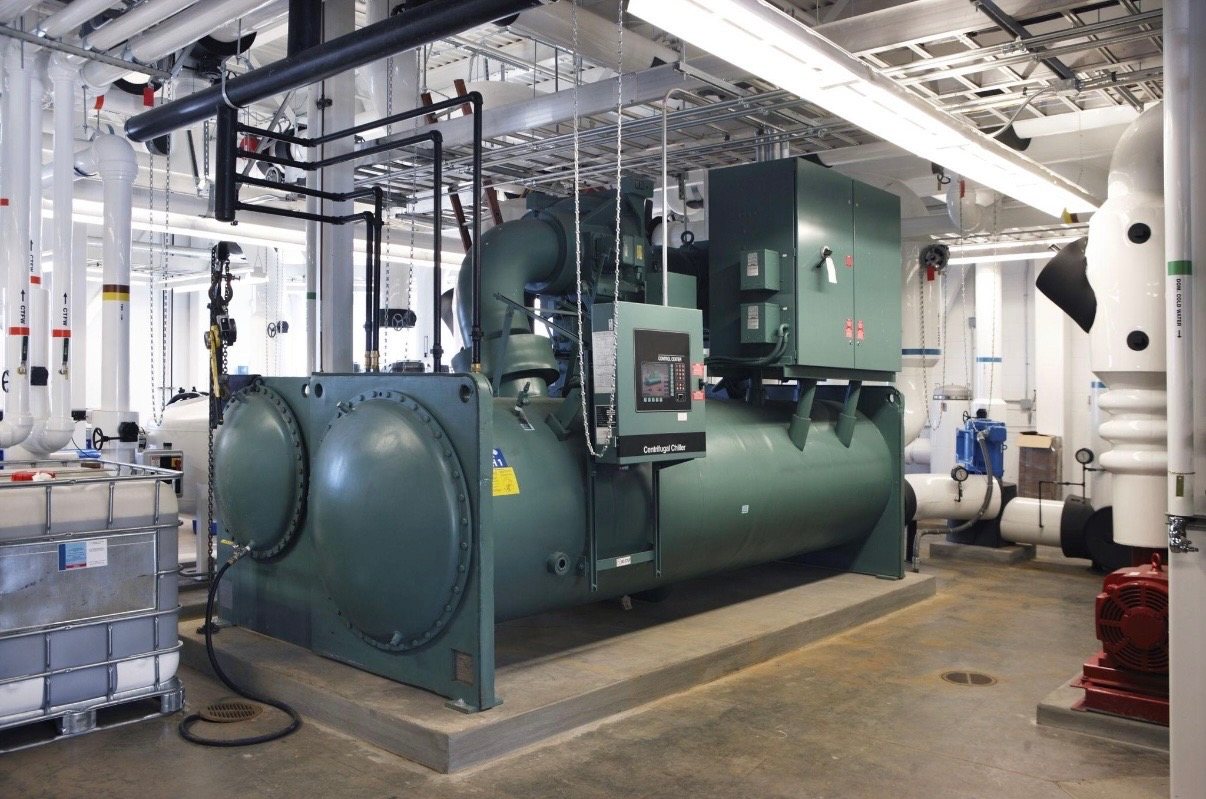
What to know about Daikin chillers
Daikin equipment should be identified by the name on the actual chiller and the full model information, not merely by a building inventory. Some sites also have older McQuay-labeled equipment; send the label that is present rather than guessing at a replacement designation.
A chiller labeled Daikin in Akron may be surplus after a plant upgrade, building closure or cooling-system replacement. Identify the exact machine rather than the entire plant, and specify whether the starter or drive is part of the proposed purchase.
Plan the pickup at your Akron site
Akron is in Summit County. An Akron facility may have a packaged unit outdoors or a central-plant machine below occupied floors. Identify the floor, service entrance and any equipment that remains in operation. Where the route crosses an occupied area, agree on protection and movement windows with the site representative before a removal plan is finalized.
Tell us about known site restrictions before scheduling. A site contact can explain what is accessible, but the removal team must evaluate the actual route, load and work area.
Work with an incomplete equipment record
Photograph the nameplate, controller, overall frame and any separate drive or starter included in the transaction. Include the actual refrigerant marking.
If the tag is difficult to read or the machine is no longer powered, a wide photo and an existing asset list can still start the conversation. Do not climb, remove electrical covers or enter an unsafe area to obtain a picture. Send whatever model, serial, capacity, voltage and refrigerant information is safely available, and clearly mark unknown fields so they are not mistaken for confirmed facts.
Condition is information, not a testing requirement
Explain whether the machine is complete, has been modified, or has an unknown service history. It is not necessary to run it for an initial review.
A long idle period can leave the maintenance history incomplete. Give the last known status and distinguish what you observed from what an old record says. An unreadable label or an unknown fault is better described honestly than filled in with a guess.
We consider used, surplus and non-running chillers, including equipment of unknown operating condition. There is no need to restore power, repair a fault or perform a performance test to ask for a cash offer. Accurate disclosure and a possible site access review are different from requiring the machine to operate.
Confirm electrical and controls boundaries
A chiller can have power and control connections in different places, including a separate starter or drive. Tell the buyer where those cabinets are and which building controls remain. The buyer covers the agreed disconnects and refrigerant recovery, using appropriately qualified personnel. Do not remove covers, disconnect wiring, reset controls or assume that a blank display means the system is electrically safe.
Use drawings without treating them as a lift plan
Give the unit dimensions and the narrowest clearance along its proposed exit, including any overhead piping that cannot be moved.
Existing dimensions, rigging drawings or documented weights can help frame the job, especially for a large central-plant unit. Tell us whether they describe the installed configuration or an earlier one. The buyer covers agreed rigging, crane if needed, loading, freight and hauling. The crew still verifies current obstacles, floor capacity, actual weight and lifting points before moving the equipment.
Coordinate a sale with a larger project
A replacement or shutdown may have several contractors working against different milestones. Tell us when the equipment can be released, who approves access and whether shared systems need to stay operational. We make a cash offer and pay upfront before pickup when accepted. Put the asset list and agreed buyer-paid removal work in writing so the chiller purchase is not confused with the entire plant project.
For multiple units, label each nameplate photo to match its location. Decide whether the sale includes all machines as a group or only the ones listed in the offer; nearby pumps and electrical gear are not automatically included.
What to send for a useful first conversation
Start with an asset list: manufacturer, model, serial, rated capacity, refrigerant and the location of each machine. Identify which units are surplus and whether they are still connected. Add photographs showing the room, pad or roof and the route toward a loading area. If the records are incomplete, mark unknown items rather than guessing or starting the machine.
For a chiller labeled Daikin in Akron, include the location and a contact who can confirm the asset and arrange site access. If a detail is unavailable, say so instead of taking an unsafe photograph or guessing at the specifications.
What if another system must stay running?
Identify the live system and ask the facility representative to mark the boundary with the chiller being sold. The buyer plans the agreed disconnect and removal with qualified personnel. A site-specific review is different from testing the chiller for purchase.